Inclusive Math
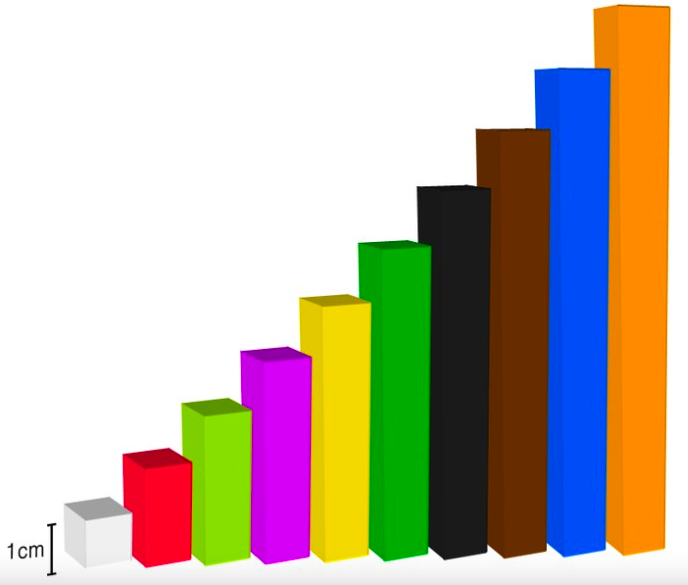
Kali, the math teacher at ROCS, approached my son and I after school one day, asking if we would, with our 3D printer, be interested in a special project involving redesigning a set of math tools. These particular tools are called Cuisenaire Rods, and they are a set of wooden rectangular bars, used to explore all sorts of math concepts hands-on. I’m pretty sure most of you have used or seen them at some point, as they’ve been around since the 1950s.
The irony here is that though these tools are meant to bring math to a student in a is fun and eye-opening way, for one student, this tool was more of a hindrance. The rods are coded by different lengths for distinction, they are also coded by different colors, and for a color blind student, that can make using them difficult.
There are ways to get around this, “problem” but calling it a “problem” at all isn’t very ROCS like. It isn’t inclusive, and the adjustments require additional work on the student’s part. Kali wanted her student to have the same opportunities as all of their classmates, and to remove the barrier that kept them from fully engaging with the rods. So really, it seemed like it was the rods that needed an adjustment.
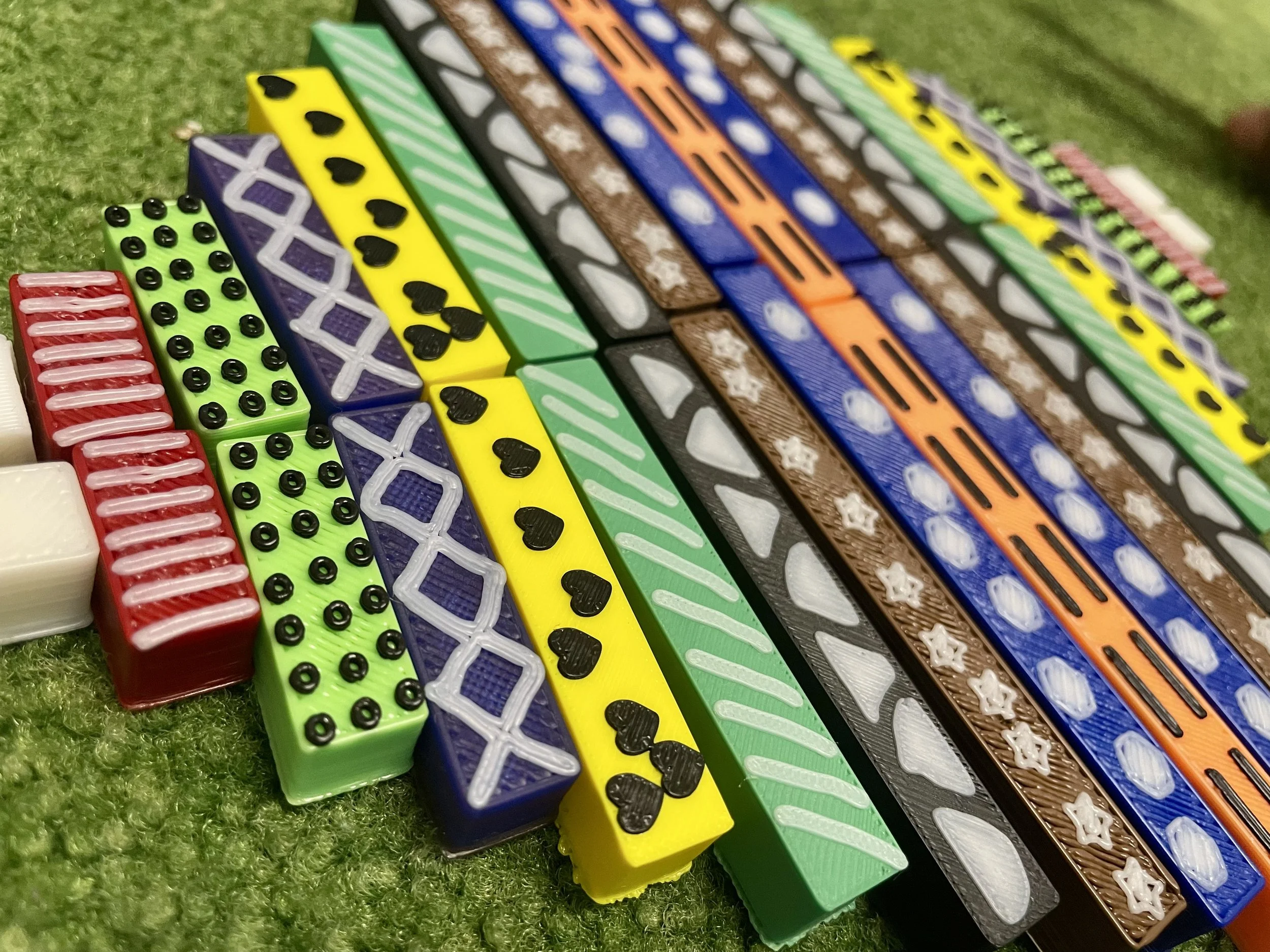
She had an idea: What if we put contrasting patterns on them?
Before I go further, I would like to mention that my son loves technology. He bought both his first and second 3D printer with his saved up allowance, and he learned the programs to work such things pretty much on his own. When this question was presented to him, it wasn’t a matter of whether he could ( “uhhh, sure. Why not?”), it was really whether he wanted to.
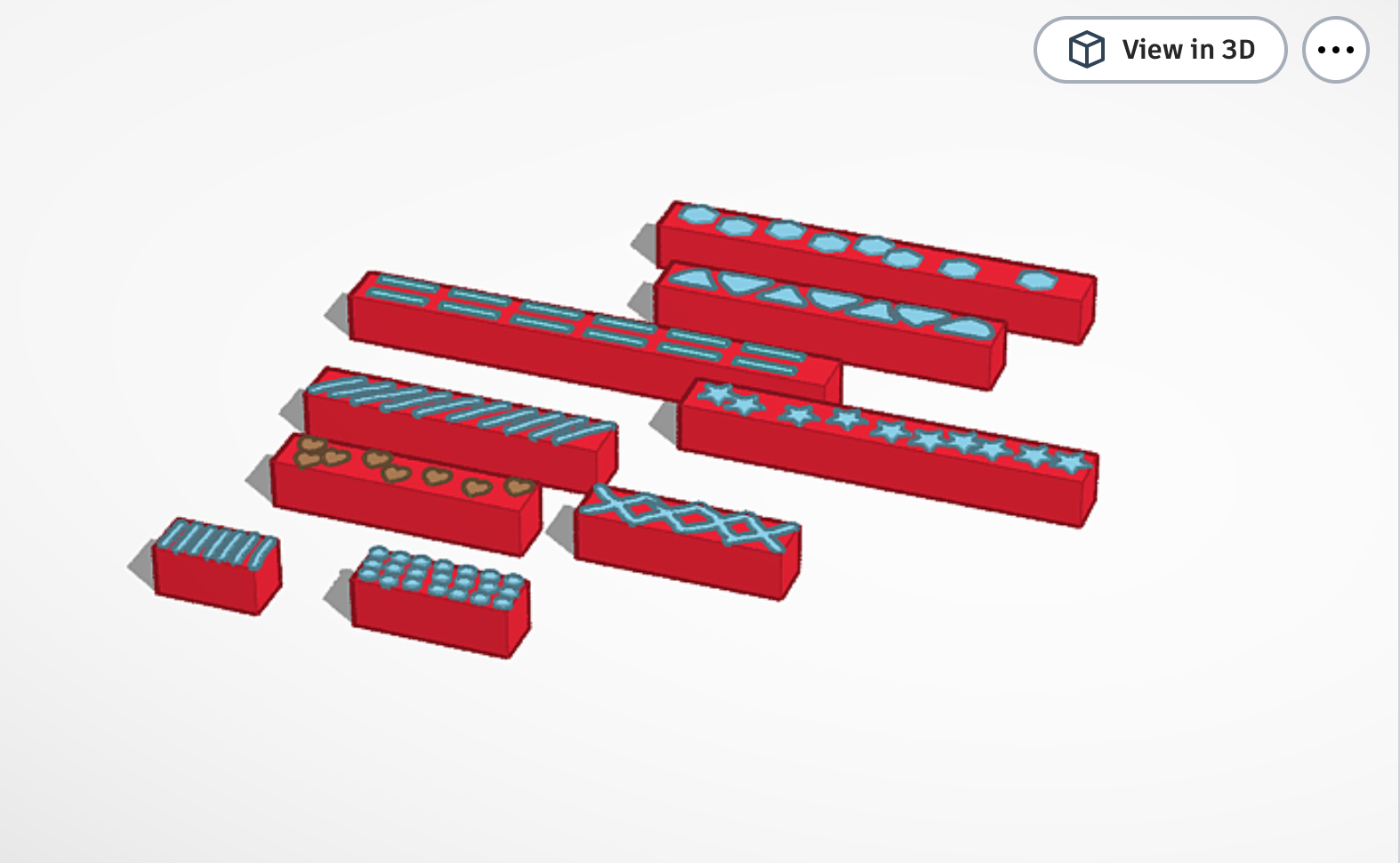
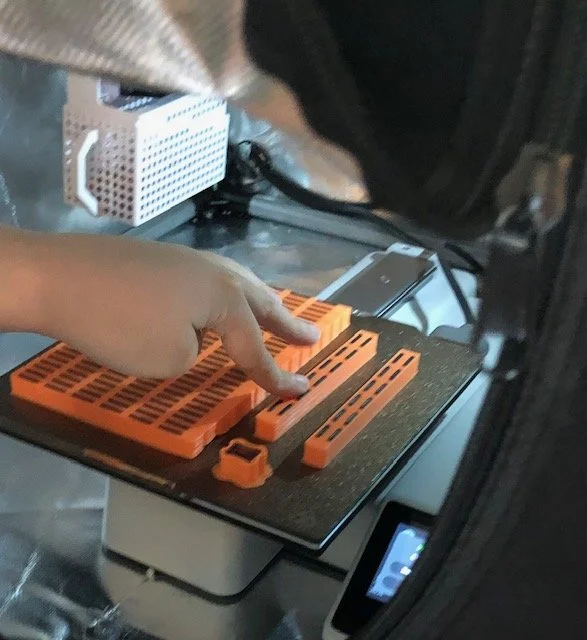
To make these rods, they would need to be designed in a 3D modeling program, transferred to 3D print program, printed (still in multiple colors to keep them from standing out from other student’s rods) and then divided into sets. Besides being a somewhat lengthy project with multiple parts to keep track of, we had learned 3D printers to be not the most consistent technology, often needing readjustments and problem solving when changing spools or using multiple colors. This project would involve 10 different colors, all of which were using two colors in a print.
So I understood his hesitation.
However, we talked him into it, and told him we’d be helping him the whole way. I was very excited for him, because I knew all the skills and values that would come into play here: advocacy, creativity, curiosity and resilience, just to name a few. This is his last year here at ROCS. And this project seemed to really resonate with what we had most hoped he would learn here and all he would take with him when he left.
We started by doing some trials. It took a while to figure out the best patterns to use – I had thought we could pull 2D pre -made patters from online and attach them to the top layer of the rods, but I learned quickly it was not that easy. My son stepped in and found a better way – designing them from scratch in a program called Tinkerkad. He used the dimensions of the original rods to build ten 3D models, 1 of each size. Then, using the library of 2D shapes in the program, he experimented with which ones would make the best patterns, and layered them on top of each rod. We printed a test set, took them to Kali, and took account of her adjustments.
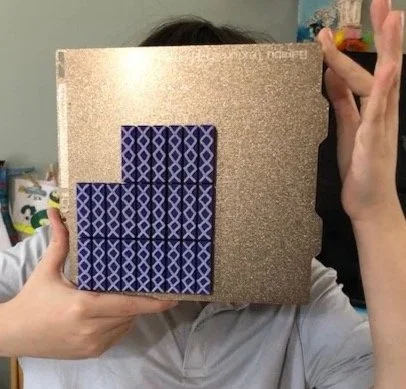
Not long after it was time to print the actual rods. However, the cost of printing these, and the time would take were significant...so we needed ROCS to help us cover that. And to do that, we would need a proposal.
This was an interesting process to work on with my son. There were elements of “why?” to answer, in addition to the “how?”, “what exactly”, and “time? /money?” questions. He made a power point and stated the case. In total, it would be about 20 hours of printing, and over 12 hours of work – definitely the longest single project he’s done with his printer thus far.
The project got approved (of course it did!) and then it was time to order filament (brown is surprisingly difficult to find.) He started printing. There was a lot of resilience needed here – the 3D printer wasn’t working well right off the bat, and having to switch colors and keep track of all the elements was…a lot. But he did great and it was so exciting to see how excited he was when the first batch finally came off the printer.
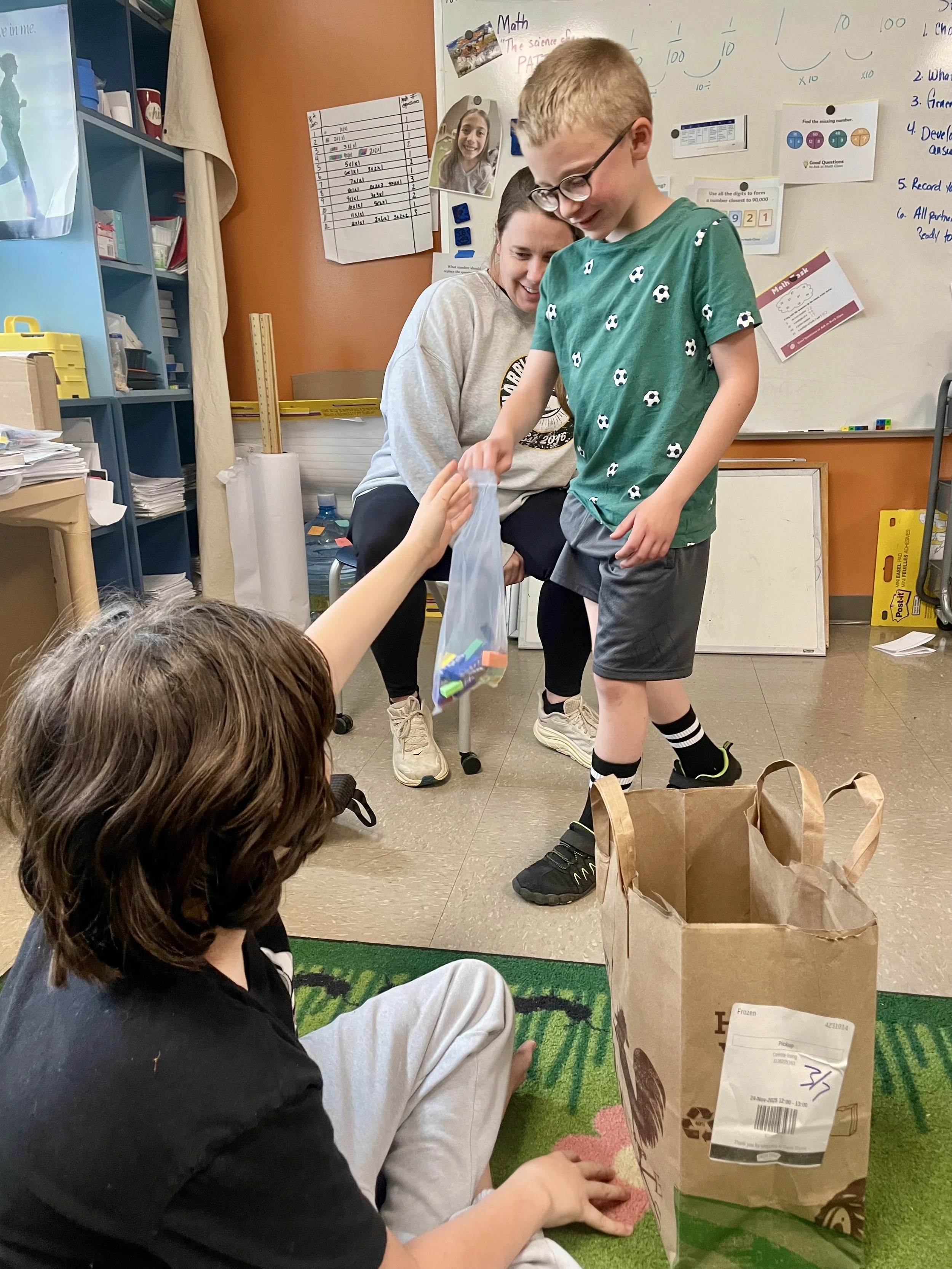
Even more exciting was the day when he got to give the prints to Kali and her student. When I asked how it went- showing the student the finished project- he said, “He said he could see them.” And when his dad asked how that felt, he said, “Good.”
-Celeste, ROCS mom